The Rise of Facelifts in Younger Patients: Why Caution and Context Matter
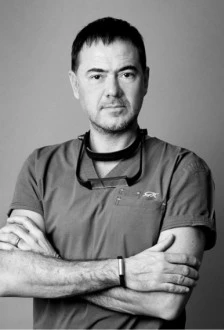
Medically Reviewed 03 July 2026, by Mr. Tunç Tiryaki (GMC 7497351)
I would like to thank the Daily Mail for including my comments in their recent article about the rise of young patients seeking facelift procedures. It’s a subject that deserves serious discussion, not only because of what it says about our cultural attitudes toward beauty, but also because of the responsibility surgeons carry when navigating these shifting expectations.
In recent years, I’ve noticed a marked increase in enquiries from younger patients – some even in their late twenties – asking about facelifts or mini lifts. While I would never operate on someone in their twenties unless there was a genuine medical reason, it is undeniable that perceptions of ageing have changed. People are more alert to the earliest, most subtle signs of facial change and are taking action much earlier than previous generations.
A decade ago, facelift consultations were almost entirely from people in their fifties or sixties. Today, it is common to see patients in their thirties and early forties seeking small, natural refinements to maintain rather than restore their appearance. This movement is part of a wider trend I call “prejuvenation” - the idea of acting early to slow visible ageing before it takes hold.
Why younger patients are seeking surgical advice
Several factors have driven this shift. The most obvious is the influence of social media. We live in an era of relentless self-scrutiny, where every detail of the face can be captured, filtered and compared. Platforms such as Instagram and TikTok have redefined beauty standards; it’s no longer just celebrities setting the benchmark, but influencers, filters, and even AI-generated images. The result is a world where perfection appears not only possible but expected — and many young people subconsciously chase those digital ideals in real life.
Another contributing factor is what I refer to as “filler fatigue.” After years of non-surgical interventions like Botox and dermal fillers, some patients feel their faces have lost their natural balance. They come to me wanting to look more like themselves again, without the puffiness or distortion that can occur from overuse of injectables. In these cases, a subtle surgical lift can sometimes be a more natural, long-term solution than continued filler.
Finally, there’s the broader wellness movement. People are investing in their health, fitness and skin from a much younger age. They eat better, exercise more and adopt preventative skincare routines -so they naturally want their faces to reflect the youth and vitality they feel inside.
The rise of “trend-led” procedures… and why I refuse them
Among younger patients, I’ve received an increasing number of requests for procedures such as “fox eye” surgery buccal fat removal. These trend-led treatments promise an immediate transformation but can cause long-term harm. Removing too much buccal fat, for example, can create premature hollowing that makes a person appear older than they are. I refuse to perform these operations on anyone, regardless of age.
For younger patients seeking refinement rather than reinvention, non-surgical treatments remain far more appropriate. Botox, skin-tightening devices such as radiofrequency microneedling, and regenerative treatments that improve skin quality can all deliver beautiful results without altering natural anatomy.
We’ve also seen a surge in demand for rhinoplasty among those in their twenties. These requests tend to focus on refinement rather than transformation — enhancing harmony rather than changing identity. In contrast, patients in their thirties and early forties are increasingly drawn to fat transfer or stem cell-based regenerative procedures, which rejuvenate and “future-proof” the skin without looking surgical.
The pros and cons of surgery at a young age
There are undeniable biological advantages to operating on younger patients. Their skin has better elasticity, collagen levels are higher, and healing is faster. Scars fade more quickly, and swelling tends to resolve sooner. However, that does not mean surgery is the right decision.
At 28, most people simply do not have the degree of skin laxity or deep tissue descent that warrants a facelift. Performing surgery prematurely can result in unnatural tightness and may complicate future procedures. My philosophy is grounded in “the least intervention possible.” If someone doesn’t need surgery, I tell them so — and I turn away around a quarter of prospective patients each year for this reason.
There is also a psychological dimension to consider. Motivation is everything. If someone is seeking surgery because they feel pressure to look perfect or are comparing themselves to filtered images online, surgery is unlikely to solve the problem. It is vital that expectations are realistic and that the motivation comes from a healthy place.
When I refuse to operate
I have a strict ethical line when it comes to operating on young patients. I would only consider a facelift in someone under thirty if there was a genuine medical indication, such as facial asymmetry or significant skin laxity caused by illness or extreme weight loss. In every consultation, I evaluate both the physical and psychological suitability of the patient.
If I sense that someone is driven by social comparison, insecurity, or a desire to chase perfection, I decline the case. Surgery should never be performed to satisfy a trend or temporary ideal. My role is to enhance, restore and preserve - never to erase or distort.
I also avoid using traditional dermal fillers because of the long-term effects I’ve observed. Instead, I use biofillers made from the patient’s own blood plasma. These are safer, natural and regenerative, improving skin quality while respecting facial identity.
How surgery differs in younger patients
When I do operate on younger individuals, the approach must be highly conservative. The tissues are firmer, the skin more resilient, and there is little to no sagging to correct. In these cases, I perform mini-lifts or micro-lifts - procedures that work beneath the skin to reposition and support, rather than tighten.
This creates a subtle, natural improvement, often focused on the mid-face and jawline. Recovery tends to be quicker, swelling resolves faster, and because the skin’s collagen is still strong, the results can last longer. I frequently combine these procedures with fat transfer or stem cell therapy to restore volume and improve overall skin tone, ensuring that the result is harmonious and long-lasting.
A mirror to society’s expectations
So, is this a worrying trend, or simply a reflection of modern culture? I believe it’s a bit of both. It’s encouraging that people are taking control of how they age, but troubling that so many young adults feel pressured to “fix” features that don’t need fixing.
We’ve created a culture where filtered beauty has become the norm, and natural variation is treated as a flaw. My hope is that the conversation evolves from erasing age to embracing healthy ageing -using science and regenerative medicine to support the body’s natural processes rather than fight against them.
There’s absolutely nothing wrong with wanting to look your best. But the goal should always be authenticity, not conformity. The best aesthetic outcome is one that enhances your unique features and helps you feel confident, not one that makes you unrecognisable.
Looking forward: a balanced approach
For younger patients, prevention and maintenance should always come before intervention. This means focusing on skin health, UV protection, collagen stimulation and regenerative treatments that enhance the skin’s ability to repair and renew.
For those in their thirties subtle procedures can provide a natural boost, helping to preserve structure and skin quality over time. And for those in their forties, fifties and beyond, surgical options like facelifts and stem cells can restore what time has gently taken away — when done carefully, respectfully and in the right hands.
Ultimately, beauty should never come at the expense of balance. A good surgeon will not just lift your face, they’ll lift your confidence in a way that feels entirely your own.
Read the full article in the Daily Mail: https://www.dailymail.co.uk/lifestyle/beauty/article-15285111/young-women-facelifts-surgeons-age-faster.html
If you’re considering face lift surgery and want to learn more about the procedure and its benefits, Mr Tunç Tiryaki is here to provide expert insights and personalised advice.
Press below to book a consultation and take the first step towards a more youthful and rejuvenated appearance.