
 »
- Face & Eyes »
- Mini Facelift New
Mini Facelift Surgery in London
A mini facelift can be an excellent option if you are beginning to notice jowls, a softer jawline or early to moderate facial sagging, but do not feel you need, or want, a more extensive facelift.
The goal is not to change your appearance, but to restore definition, proportion and a more youthful facial contour while still looking like yourself.
A mini facelift is not simply a smaller version of a traditional facelift. The technique needs to be carefully matched to how your face is ageing, the quality of your skin, the degree of tissue laxity and the result you want to achieve. For the right patient, it can provide meaningful rejuvenation with discreet scarring and a relatively short recovery.
However, it is not the right procedure for everyone. Some patients may achieve a better result with a SMAS or deep plane facelift, lower facelift, neck lift or volume restoration such as fat transfer. Choosing the right approach is an important part of the consultation.
As a Consultant Plastic Surgeon with more than 32 years of experience and over 8,000 procedures performed, I take a personalised approach to facial rejuvenation, focusing on restoring the face rather than simply tightening the skin.
Consultations and surgery are available at our state-of-the-art clinics in Chelsea, London and Istanbul.
At a glance
Surgery Time
Approximately 1 to 1.5 hours
Anaesthesia
Sedation / anaesthesia as recommended following your consultation
Treatment area
Mainly the mid face, jawline and jowls
Scarring
Shorter, discreet scars around the ear and hairline
Dressing
A light dressing is usually worn for the first 2 days
Showering
From day 2
Exercise
Strenuous exercise should be avoided during the first week, with a gradual return to normal activity thereafter
Swelling & Bruising
Bruising and swelling are expected. Visible signs usually begin to settle during the first 1–2 weeks, although some residual swelling may take longer to resolve
Return to work
Many patients return to work and normal activities within around 7 to 10 working days
Full results
The result becomes increasingly natural over 2–3 months, with final maturation continuing for around 6 months
Best suited to
Mild to moderate facial ageing and skin laxity
Longevity
Long-lasting, although your face will continue to age naturally
Before & After Mini Facelift
Before and after photographs can give you an idea of what surgery can achieve, but they should never be viewed as a promise of a particular result.
Every face is different.
The degree of ageing, skin quality, facial structure and volume varies from one patient to another, so the result that is right for you will also be unique.
You can view examples of mini facelift results in my before and after gallery, with photographs shared with patient permission.
Individual results vary.

What is a Mini Facelift?
When we talk about a mini facelift, we are usually talking about a less extensive facelift designed to address early signs of ageing, particularly around the lower face and jawline.
You may have started to notice that your jawline is no longer as defined as it once was. Perhaps small jowls have appeared, the lower cheeks feel heavier or the skin has started to lose some of its firmness.
These changes can happen gradually, and you may not feel that you need, or want, a full facelift. A mini facelift can reposition the tissues that have started to descend and restore some of the definition that has been lost. It is not simply a case of tightening the skin.
The face has several layers, including the skin and the underlying SMAS layer, which provides support to the facial tissues. Treating the deeper structures can help create a more natural result and reduce the risk of the skin looking overly tight.
The incisions are generally shorter than those used for a more extensive facelift, which can mean less visible scarring and a shorter recovery.
For carefully selected patients, a mini facelift can be a very effective way to achieve a subtle but meaningful improvement.
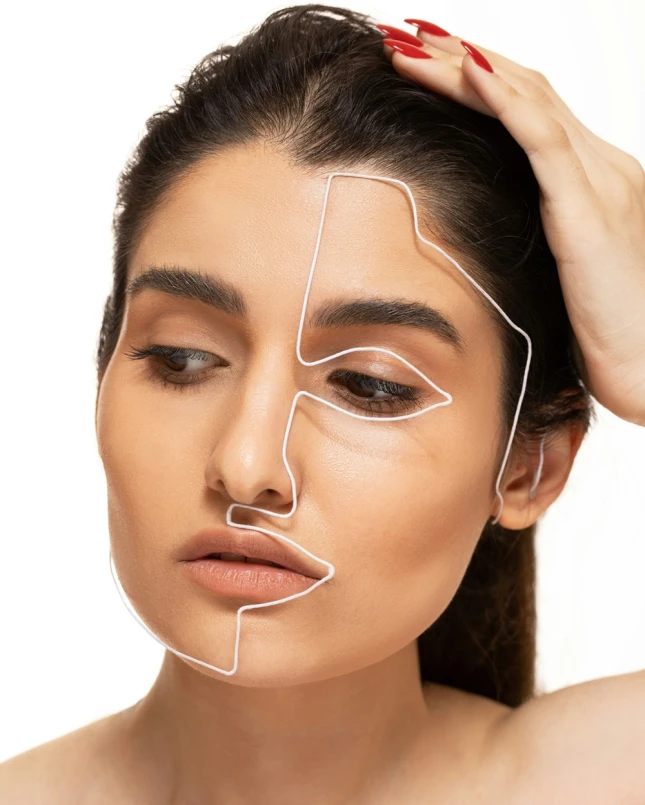
Mr Tiryaki’s Mini Facelift offers significant rejuvenation benefits, including a natural restoration of facial contours and a reduction in the signs of ageing such as sagging and wrinkles. This minimally invasive procedure ensures quicker recovery times and enduring youthful results.
What can a mini facelift improve?
A mini facelift is particularly useful for early to moderate changes affecting the lower face.
It can help improve:
- Jowls
- Loss of jawline definition
- Mild to moderate skin laxity
- Early sagging of the lower cheeks
- Some areas of mid-face descent
- Early neck laxity
- Overall facial definition
It can also be combined with other treatments where appropriate. For example, some patients have lost facial volume as well as developing laxity. In these cases, fat transfer may be considered to restore volume and improve the balance of the face.
This is one of the reasons I prefer to assess the whole face rather than simply treating the area that concerns you most. Facial ageing rarely happens in isolation. Improving one area can sometimes make another area more noticeable.
The best result is usually one that considers the face as a whole.
Who is a mini facelift suitable for?
There is no specific age at which you should have a mini facelift, as everyone ages differently.
Many patients well suited to the procedure are in their 40s or early 50s and have started to see mild to moderate changes in their face. They may want to look fresher and more defined without undergoing a more extensive operation.
But age is only part of the picture. During your consultation, I will assess your skin quality, facial structure, degree of laxity, volume loss, and how your face has changed over time.
A mini facelift may be suitable if you:
- Have mild to moderate facial laxity
- Are beginning to develop jowls
- Have lost some definition around the jawline
- Have reasonably good skin elasticity
- Want a natural-looking improvement
- Are in good general health
- Have realistic expectations about what surgery can achieve
- Have a stable weight
A mini facelift can reposition and tighten ageing tissues, but it cannot stop the ageing process or completely change the way your face looks. The aim is to make you look fresher and more rested, not like a different person.

When is a mini facelift not enough?
This is an important question, and one I believe every patient considering a facelift should ask.
A mini facelift is not the right operation for everyone.
If there is significant laxity in the neck, prominent platysmal bands, more advanced facial ageing or substantial excess skin, a more comprehensive procedure may be needed.
For example, you may be better suited to a:
- SMAS facelift if there is more established lower facial ageing and laxity.
- Deep plane facelift if there is more significant descent of the mid and lower face and a deeper repositioning of the facial tissues would be beneficial.
- Lower facelift if your concerns are concentrated around the lower face and jawline but require more correction than a mini facelift can provide.
- Neck lift if loose skin or muscle changes in the neck are a significant concern.
- Stem Cell Assisted Facelift if facial ageing involves a combination of tissue laxity, volume loss and changes in skin quality.
- Fat transfer if restoring lost facial volume would help improve the balance and proportions of your face.
Sometimes a combination of techniques produces the most balanced result.
The right procedure should be determined by your anatomy, the changes you want to address and the result you hope to achieve; not simply by choosing the least invasive option.
Mini facelift vs deep plane facelift
There is often a lot of confusion around the different types of facelift.
The truth is that there is no single facelift technique that is right for everyone.
A mini facelift is generally designed for patients with earlier, more limited facial ageing. It can improve jowls, jawline definition and mild to moderate laxity with a shorter incision and relatively short recovery.
A deep plane facelift works at a deeper anatomical level and is generally considered when there is more significant descent of the mid and lower face.
A SMAS facelift is another approach that addresses the deeper supporting tissues and can be appropriate for patients with more established ageing.
A neck lift focuses specifically on the neck and may be recommended when neck laxity or platysmal changes are a significant part of your concerns.
The important thing is not choosing the procedure with the most impressive name. It is choosing the procedure that matches your face.
Areas Addressed
Very early jowling, subtle lower-face laxity and small changes in jawline definition
Incisions
Very short, discreet incisions around the ear
Anaesthesia
Sedation / anaesthesia as appropriate
Downtime
7 days
Strength of Correction
Subtle
Longevity
Long-lasting, with continued natural ageing
Ideal Candidates
Patients with very early signs of facial ageing who want a subtle improvement
Areas Addressed
Mid face, jowls, jawline and some early neck laxity
Incisions
Shorter incisions around the ear and hairline
Anaesthesia
Sedation / anaesthesia as appropriate
Downtime
Around 14 days
Strength of Correction
Mild to moderate
Longevity
Long-lasting, with continued natural ageing
Ideal Candidates
Patients with mild to moderate facial laxity, jowling and loss of jawline definition
Areas Addressed
Mid-face and lower face, including more significant tissue descent
Incisions
Longer incisions around the ear and into the hairline, depending on technique
Anaesthesia
Sedation / general anaesthesia as appropriate
Downtime
Around 14 days
Strength of Correction
More comprehensive
Longevity
Long-lasting with continued natural ageing
Ideal Candidates
Patients with more significant mid- and lower-face descent and established facial ageing
Areas Addressed
Neck laxity, loose skin and, where appropriate, changes involving the platysma
Incisions
Incisions around the ears and/or beneath the chin, depending on the technique
Anaesthesia
Sedation / anaesthesia as appropriate
Downtime
Approximately 4-6 weeks
Strength of Correction
Focused correction of the neck
Longevity
Long-lasting, with continued natural ageing
Ideal Candidates
Patients whose primary concerns are loose neck skin, neck laxity or prominent platysmal changes
Please note: Recovery times and results vary from patient to patient and depend on factors including the procedure performed, individual healing, lifestyle and overall health. The longevity of results will also vary, as the face continues to age naturally following surgery. The information provided is intended as a general guide and should not be considered a guarantee of a particular recovery time or result.
What happens during a mini facelift?
A mini facelift starts with careful planning. The aim is not simply to tighten the face, but to understand what is changing, what you would like to improve and what you want to preserve.
Your consultation
At your consultation, we will talk about the areas that are bothering you, whether that is early jowling, a softer jawline, loose skin or a general loss of definition. Just as importantly, I want to understand what you do not want to change. A natural result should still look like you.
I will assess your facial structure, skin quality, degree of laxity, facial proportions and the underlying tissues before deciding whether a mini facelift is the right procedure for you. If I feel that another approach would give you a better or longer-lasting result, I will explain why.
Clinical photographs will also be taken as part of your assessment and surgical planning. We will discuss the procedure, the type of anaesthesia or sedation that is appropriate for you, what to expect during recovery and any questions or concerns you may have before surgery.
On the day of surgery
When you arrive for your procedure, you will have time to prepare and meet the clinical team. Your consent and surgical plan will be reviewed, and the anaesthesia or sedation will be discussed with you before you go ahead.
The surgery itself typically takes around 1 to 1.5 hours, although you will spend longer at the hospital to allow time for preparation and recovery.
Once you are comfortable and the anaesthetic has taken effect, I will carefully mark the planned incision. The incision is usually placed around the ear and may extend slightly into the hairline, depending on your anatomy and the technique being used. The aim is to position the scar where it can be discreet once healed.
Supporting the deeper tissues
A mini facelift is not simply a matter of removing excess skin. Once the incision has been made, the skin is carefully lifted to allow access to the tissues beneath it.
Where appropriate, the SMAS layer, which provides important support to the lower face, is repositioned or tightened. The exact technique will depend on your anatomy and the degree of correction needed.
This is an important part of creating a natural result. Rather than relying on tension in the skin, the underlying tissues are repositioned first. The skin can then be redraped over the new contours without having to pull it excessively tight.
The goal is a face that looks fresher and more defined, not a face that looks as though it has been pulled or stretched.
Redraping the skin
Once the deeper tissues have been addressed, the skin is gently redraped. Any excess skin is removed, while taking care not to remove more than is necessary.
The incisions are then closed carefully. I pay particular attention to the position and tension of the closure because the quality of the scar is an important part of the final result.
What happens after surgery?
Once the procedure is complete, you will be taken to the recovery area where you can rest and be monitored as the effects of the anaesthetic or sedation wear off.
You will usually leave with a light dressing in place, which will remain on for the first 2 days. This helps protect the incisions and support the tissues during the early stages of healing. I will explain how to care for the treated areas.
Before you leave, you will be given clear instructions about keeping the incisions clean, sleeping position, activity, medication and what to expect over the following days. You will also be told when I would like to see you for your follow-up.
It is normal for the face to feel tight immediately after surgery, with some swelling, bruising or altered sensation as the tissues begin to heal. These changes are temporary and form part of the normal recovery process.
The important thing to remember is that a mini facelift is not a standardised operation. The incision, the way the deeper tissues are treated and the amount of skin removed will all depend on your face and the changes we are trying to address. That is why careful planning matters. The best result comes from choosing the right technique for your anatomy, rather than trying to make every face fit the same operation.
What are the risks?
All surgery carries risks, and it is important to understand this before deciding to proceed.
Some effects are a normal part of recovery. These include bruising, swelling, tightness and temporary numbness or changes in sensation.
There are also less common complications to be aware of, which can include:
- Bleeding or haematoma
- Infection
- Delayed wound healing
- Scarring
- Persistent numbness
- Asymmetry
- Skin healing problems
- Nerve irritation or, rarely, nerve injury
- Anaesthetic complications
- The need for further or revision surgery
Your individual risks will depend on your health, medications, lifestyle and the extent of surgery required. These will all be discussed with you before surgery so that you understand both the potential benefits and the limitations of the procedure. No surgeon can guarantee a particular outcome. Healing varies between patients, and the face will continue to change naturally with age.
How much does a mini facelift cost in London?
The cost can vary depending on the complexity of your surgery and whether you need treatment in other areas.
Factors can include:
- The extent of facial laxity
- Whether the neck also needs treatment
- Whether fat transfer is recommended
- The type of anaesthesia
- Surgical and facility fees
- Aftercare
- Whether you have had previous facial surgery
For this reason, a personalised quotation is provided following consultation.
A consultation is also an opportunity to understand exactly what is being recommended, why it is appropriate for you and what is included in your treatment.
Mini Facelift Recovery
One of the attractions of a mini facelift is the relatively short recovery compared with more extensive facial surgery. However, this does not mean there is no recovery period. You should expect some swelling, bruising and tightness initially, which are all very normal parts of healing and this will gradually improve.
The first 48 hours
The first couple of days should be dedicated to rest, allowing your body to begin healing.
Swelling and bruising are expected, and you may experience some tightness, discomfort or temporary numbness.
The dressings can be removed after 2 days.
Days 3 to 7
You should gradually feel more comfortable and mobile.
Bruising and swelling will begin to settle, although you may still have visible signs of surgery. Strenuous exercise should be avoided during this stage.
Days 8 to 14
Many patients feel comfortable returning to work and normal social activities during this period.
How quickly you return to your routine will depend on how you are healing and the nature of your work. It is worth remembering that looking well enough to go out is not the same as being completely healed. Your tissues are still settling.
Weeks 3 to 4
Most of the obvious swelling and bruising should have improved considerably.
You can gradually return to more of your usual activities, following the specific advice given to you after surgery.
Your scars will also continue to change and mature.
Two to three months
The face continues to settle and the result becomes increasingly natural.
Residual swelling will continue to resolve and the tissues will soften as healing progresses.
Six months and beyond
The final result continues to mature over time. Scars can also continue to fade and soften.
A facelift does not stop you ageing. It simply turns back some of the changes that have already occurred. You will continue to age naturally, but the improvement created by surgery can remain for many years.

Why choose Prof Tunc Tiryaki?
Choosing your surgeon is arguably the most important decision you will make when considering a facelift.
Facial surgery requires a detailed understanding of facial anatomy and the deeper structures that support the skin. It also means considering volume, proportion and how the face naturally changes with age, rather than simply removing excess skin.
I am a Professor of Plastic Surgery and board-certified Plastic Surgeon with more than 32 years of experience, having performed over 8,000 procedures.
My work has a particular focus on facial surgery and regenerative techniques, including fat transfer where appropriate.
I have been recognised by Tatler and featured extensively in UK and international media, including appearances across major broadcasters such as BBC, ITV and Channel 4. I also have an international professional profile through my work with organisations including ISAPS, alongside my published work in plastic and reconstructive surgery.
My work has also extended beyond private practice. I have been involved in humanitarian surgical work internationally and was awarded a Medal of Honour in the UK Parliament in recognition of this contribution.
My GMC number is 7497351.
But credentials only tell you part of the story. Choosing a surgeon is also about their judgement, experience and approach to your face.
That is why I do not approach every patient with the same operation. I take the time to understand your face, how it is changing and what you want to achieve, then recommend the approach that I believe will give you the most natural and balanced result.
Your face is unique, and your treatment should be too.
Frequently Asked Questions
Is a mini facelift the same as a facelift?
No. A mini facelift is generally a more limited procedure for patients with earlier or moderate facial ageing. A more extensive facelift may be recommended when there is greater skin laxity or more significant descent of the facial tissues.
What age is best for a mini facelift?
There is no ideal age. Many suitable patients are in their 40s or early 50s, but your facial anatomy and degree of ageing are more important than your date of birth.
Will a mini facelift get rid of my jowls?
It can improve jowling when the jowls are caused by the degree of facial laxity that a mini facelift can address. If the laxity is more advanced, another facelift technique may be more appropriate.
Will a mini facelift improve my neck?
It can improve early neck laxity in some patients. Significant loose skin or prominent platysmal bands may require a neck lift or a more extensive facelift.
Will a mini facelift make me look different?
The aim is to make you look refreshed, not different. Good facial rejuvenation should respect your existing features and proportions rather than creating an artificial appearance.
How long does the surgery take?
A mini facelift typically takes around 1 to 1.5 hours, although you will be at the surgical facility for longer because of preparation and recovery.
How long will I need off work?
Many patients return to work within approximately 7 to 10 working days, although this depends on your recovery and the type of work you do.
Will I have visible scars?
There will be scars because a facelift requires incisions. These are carefully positioned around natural contours and are generally shorter with a mini facelift. They will continue to mature and fade over time.
How long will the result last?
A mini facelift produces a long-lasting improvement, but it does not stop the ageing process. Your face will continue to age naturally after surgery.
Is a mini facelift better than a deep plane facelift?
Neither is automatically better. They are different techniques designed for different patterns and degrees of facial ageing. The right operation depends on your face and what you want to achieve.
Can I have fat transfer at the same time?
In selected patients, yes. Fat transfer can restore volume that has been lost with age and can sometimes complement a facelift.
Can I have a mini facelift after losing a lot of weight?
Possibly, but significant weight loss can result in more extensive skin and tissue laxity. In these cases, a more comprehensive facelift may be more appropriate.
Is a mini facelift permanent?
No facelift can permanently stop ageing. The surgery creates a long-lasting improvement, but your face will continue to change naturally over time.
Is a mini facelift right for you?
The right facelift is not necessarily the smallest procedure or the most advanced-sounding technique.
It is the one that addresses the changes you are experiencing in a way that suits your face and your expectations.
If you are considering a mini facelift in London, I can assess whether it is the right procedure for you and explain the alternatives if it is not.
Trends & Insights

Tatler Beauty & Cosmetic Surgery Guide 2026
Honoured to be featured in the Tatler Beauty & Cosmetic Surgery Guide 2026 as a top facial surgeon with a regenerative, natural-focused approach.

The Rise of International Regenerative Aesthetics: Why Patients Are Travelling Across the World for a More Natural Approach
More patients are travelling for stem cell facelifts and skin regeneration. Learn why natural aesthetics is reshaping cosmetic surgery.

The Rise of Facelifts in Younger Patients: Why Caution and Context Matter
Younger people are increasingly seeking facelifts. Discover what’s driving the trend and why ethical surgeons urge caution before committing.
Medically Reviewed 03 July 2026, by Mr. Tunç Tiryaki (GMC 7497351)